Business water rates are what a business pays for its water and wastewater. With a meter, you pay for each cubic metre of water plus a fixed charge; without one, a set amount usually based on your property's value. Drainage and trade effluent charges can be added. Water and sewerage are usually zero-rated for VAT, but water used for an industrial activity is charged at 20%. Scotland, Wales and Northern Ireland each have their own rules.
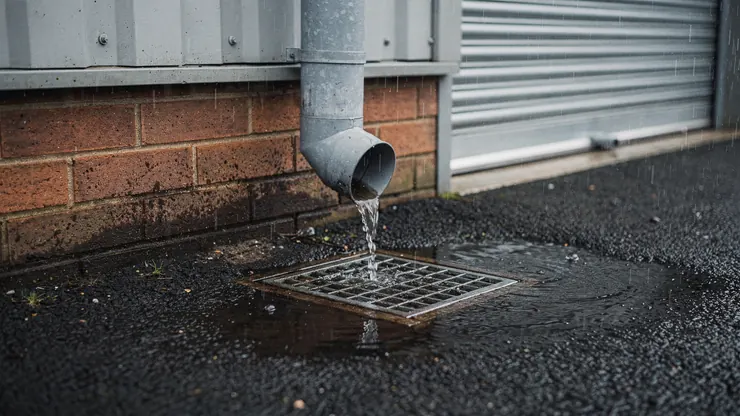
What are business water rates?
Business water rates are the charges a business pays for its water supply and for taking away its wastewater. They're separate from business rates, which your council charges on most non-domestic properties, although unmetered water charges are usually based on the value of your property too.
Your bill has two parts:
- Wholesale charges, for supplying the water and taking away the wastewater. The regional water company, or companies, for your area set them for each charging year, which runs from 1 April to 31 March.
- Retail charges, for billing, meter reading and customer service, set by your retailer.
In England, Ofwat regulates the wholesale prices, and retailers set their own prices on top. If you don't switch or agree a new deal, Ofwat limits the price you pay. The government plans to replace Ofwat with a new water regulator, but until that body is set up, Ofwat keeps its full powers.
Most businesses in England and Scotland can choose their retailer, while their regional water company still supplies the water, so it's worth comparing business water rates and suppliers.
How are business water rates calculated?
In England and Wales, a business water bill can include the charges in the table below. Each water company publishes its own charges scheme, and must do so by 1 February, so what you pay depends on where you are.
What's on a business water bill in England and Wales
| Charge | What it pays for | How it's usually worked out |
|---|---|---|
| Water supply | The clean water you use | With a meter, a charge for each cubic metre (1,000 litres) plus a fixed charge. Without one, a set amount, usually based on your property's value. |
| Wastewater | Taking away and treating the water that goes down your drains | From the water you use, assuming most of it, usually 90% to 95%, returns to the sewer |
| Surface water drainage | Rainwater that drains from your property into the public sewers | Can be based on the size of your site |
| Highway drainage | Rainwater that falls on roads and footpaths | Can also be based on the size of your site |
| Trade effluent | Liquid waste from a business or industrial process, such as water containing fats, oils, chemicals or food waste | Charged on how much you send and how strong it is, usually with the industry's Mogden formula. You need the water company's consent first. |
Because wastewater is charged on the water you use, not on what actually goes down the drain, the allowances further down this page are worth checking.
Business water rates in Scotland
Scotland's business water market has been open since 1 April 2008. Scottish Water supplies the water and takes away the wastewater, and businesses pay their charges to one of the providers licensed by the Water Industry Commission for Scotland (WICS). Business Stream, Scottish Water's own retail company, is one of them.
A Scottish business water bill has six parts: a fixed water charge, a charge for the water you use, a fixed wastewater charge, a charge for your wastewater, property drainage and roads drainage.
- Metering is the default. Businesses are charged on a meter unless that isn't practical. Without one, water and sewerage charges are based on your property's rateable value.
- Wastewater is charged on 95% of the water your meter records.
- Property drainage is based on rateable value by default, and only applies if your property drains to the public sewer.
- Roads drainage is charged to all eligible premises, as Scottish Government policy.
Scottish Water's published wholesale charges show each of its business charges rising by about 8.7% from 1 April 2026, compared with 2025-26.
WICS also sets maximum prices for the default tariffs that licensed providers must offer. For 2026-27, the most a licensed provider can charge on the default tariff for water, for a standard metered connection with a meter of 20mm or smaller, is £208.24 a year per connection, plus £3.1242 per cubic metre for the first 25 cubic metres a year at a site and £1.1718 for each cubic metre after that. A licensed provider can charge less than these maximums.
Charities and community amateur sports clubs that qualify can be exempt, or get a 50% reduction, under the Water and Sewerage Charges Exemption Scheme. Other business customers fund it through charges 1.5% higher.
Business water in Wales and Northern Ireland
Wales. The rules depend on your water company's area. If it's wholly or mainly in Wales, a business can choose its retailer only if a site uses at least 50 million litres a year, and only for water, not wastewater. Dŵr Cymru Welsh Water assumes about 95% of the water its business customers use returns to the sewer.
Northern Ireland. NI Water supplies every business, and businesses can't choose another supplier. All non-domestic customers pay for their water, while household charges remain deferred. For 2026-27, NI Water's non-domestic charges rose by a weighted average of 7.9%. Sewerage is normally charged on the assumption that 95% of your water returns to the sewer, and businesses that pay rates can apply for a domestic allowance against their measured charges.
Do businesses pay VAT on water rates?
Only in some cases. Under HMRC's rules, water is zero-rated, with a few exceptions. The main one for businesses is water used for a "relevant industrial activity": any activity in Divisions 1 to 5 of the 1980 Standard Industrial Classification. Water for those activities is charged at 20%.
VAT on business water and sewerage
| What you're charged for | VAT |
|---|---|
| Water for businesses that aren't industrial, such as shops | 0% |
| Water used for an industrial activity (Divisions 1 to 5) | 20% |
| Sewerage, including charges based on the amount and strength of your effluent | 0% |
| Hot water, which is taxed as heat rather than water | Usually 20% for businesses |
| Distilled or deionised water, and bottled water | 20% |
| Cleaning, unblocking or maintaining sewers and drains | 20% |
The five divisions are:
- energy and water supply industries;
- extraction of minerals and ores other than fuels, and manufacture of metals, mineral products and chemicals;
- metal goods, engineering and vehicles industries;
- other manufacturing industries, which include food and drink manufacturing;
- construction.
This is the 1980 classification, not the SIC code you may know from Companies House. Your water supplier decides which rate applies, and may ask you to confirm your main activity in writing.
Two more rules are worth knowing:
- Mixed use isn't usually split. If your water is used for both industrial and other activities, your main activity decides the rate for all of it. There's a narrow exception for water that's invoiced separately to a VAT-exempt part of an industrial business.
- Offices count too. Water supplied to an office of a business whose main activity is industrial is charged at 20%, even if nothing is made there.
Sewerage stays zero-rated even for industrial businesses. If you're VAT-registered and are charged 20% on water, you can reclaim it in the usual way. HMRC's old VAT Notice 701/16 on water and sewerage was withdrawn in 2016, and the rules now sit in its VAT Water and Sewerage Services manual. Electricity and gas follow different VAT rules, which our guide to VAT on business energy covers.
Are business water rates higher than household rates?
We haven't found an official comparison of what businesses and households pay per cubic metre. They're charged in different ways:
- Choice. Households in England and Wales can't choose their water company, while most businesses in England can choose their retailer.
- Large users. Larger business users may qualify for a large user tariff. Ofwat's rules say differences between charges for larger and smaller users must be based only on differences in cost.
- Social tariffs, which help people who would struggle to pay their bill in full, are designed for individuals.
- Scotland. Households pay water and sewerage charges with their council tax, linked to council tax bands, while businesses pay a licensed provider, mostly for metered use.
- Northern Ireland. Households don't pay water charges directly; businesses do.
For reference, CCW, the consumer body for water in England and Wales, reported that the average household water and sewerage bill was expected to rise by about £33, to £639, from 1 April 2026, and Scottish Water puts the average Scottish household bill at £532 for 2026-27. Neither figure applies to businesses.
What's the average business water bill?
We haven't found an official average for all business water bills in the UK, England or Scotland. What you pay depends on how much water you use, your meter, how your site drains, your region and your retailer's prices.
To see where you stand, add up a year of bills and divide the total by the cubic metres of water you used. That gives your cost per cubic metre, including the fixed charges, which you can set against quotes from other retailers. Our page on business water suppliers explains how to compare them.
Charges worth checking
- Water that doesn't reach the sewer. If less of your water goes down the drain than your water company assumes, because it goes into your product, evaporates or is used for watering, your retailer can apply for a return to sewer allowance. You'll need evidence, usually readings from sub-meters. The wholesaler should decide within 20 working days, and how far back an allowance can go varies between companies. In Scotland, a licensed provider can apply for a lower figure than 95%, which goes back to 95% if the occupier or the use changes.
- Surface water drainage. If no rainwater from your site enters a public sewer, for example because it drains to a soakaway, you can apply to your water company for a reduction, with evidence. Ofwat's rules require sewerage companies to offer one.
- Large user tariffs. If you use a lot of water, ask whether a large user tariff applies to you. Water companies plan to phase out falling block tariffs, which charge less per cubic metre as use rises, by March 2030.
- Your retailer's terms. In England and Scotland, you can compare retailers and move to another one.
Want us to check your water charges? Our free check compares your water charges with today's market. A specialist will then ring to talk you through it, with no obligation.
How to complain about a business water bill
- England and Wales: complain to your retailer or water company first. If you're still unhappy once it has given its final response, or after eight weeks without one, CCW can help.
- Scotland: contact your licensed provider about your charges, or Scottish Water about its services. If you're still unhappy, go to the Scottish Public Services Ombudsman.
- Northern Ireland: complain to NI Water first. If you're unhappy with its response, you can ask for a review, and NI Water says you'll get a response within 10 working days. If you're still unhappy, the Consumer Council offers free advice.
Questions about business water rates
Do businesses pay VAT on water rates?
Only in some cases. Water is zero-rated unless it's used for an industrial activity in Divisions 1 to 5 of the 1980 Standard Industrial Classification, such as manufacturing or construction, or is a special type such as hot, distilled or bottled water. Water for an industrial activity is charged at 20%, while sewerage stays zero-rated.
How are business water rates calculated in Scotland?
Through six charges: fixed and volume charges for water, the same for wastewater, and property and roads drainage. Businesses are charged on a meter unless that isn't practical. Without one, charges are based on your property's rateable value. Wastewater is charged on 95% of the water your meter records.
Are business water rates cheaper than domestic?
We haven't found an official comparison. Businesses and households are charged in different ways: most businesses in England and Scotland can choose their retailer, larger users may get a large user tariff, and social tariffs are designed for individuals.
How much are water rates for a small business?
We haven't found an official average, and what you pay depends on your water use, meter, drainage and region. In Scotland, the most a business with a meter of 20mm or smaller can be charged for water on the default tariff is £208.24 a year per connection, plus a charge for each cubic metre it uses.
Can I reduce my business water rates?
Check for allowances. If less water goes down the drain than your water company assumes, your retailer can apply for a return to sewer allowance for you. If rainwater from your site doesn't reach a public sewer, you can apply for a surface water drainage reduction.
Do business water rates go up every April?
Wholesale charges are set for each charging year, which starts on 1 April. For 2026-27, Scottish Water's wholesale charges for businesses rose by about 8.7%, and NI Water's non-domestic charges by a weighted average of 7.9%. In England, each water company publishes its own charges scheme.
Sources
- GOV.UK, Ofwat to be abolished in biggest overhaul of water since privatisation (21 July 2025): Ofwat to be replaced, and to remain in place during the transition.
- GOV.UK, Ofwat Chair reappointed (6 October 2026): Ofwat keeps its existing legal powers until the new regulator is established.
- Defra, A New Vision for Water, White Paper (January 2026, correction slip 5 February 2026): existing regulators keep their powers until the new regulator is set up; water companies' plan to phase out falling block tariffs by March 2030 (from the correction slip).
- GOV.UK, introduction to business rates: business rates charged on most non-domestic properties.
- Ofwat, household customers and choice: household customers can't change their water supplier or sewerage provider.
- Open Water, how the retail market works: wholesale prices regulated by Ofwat; retailers set their own prices.
- Ofwat, business retail market: limits on the price customers pay if they don't switch or renegotiate.
- Ofwat, information notice IN 23/09 (13 September 2023): charges schemes published no later than 1 February.
- Ofwat, Retail Exit Code v7.0 (effective 1 April 2023): the charging year runs from 1 April to 31 March.
- GOV.UK, water and sewerage rates for businesses: metered and unmetered charges; large user tariffs; sewerage and trade effluent; no choice of supplier in Northern Ireland.
- CCW, return to sewer allowances: customer guidance: default return to sewer of 90% to 95%; applying through your retailer with evidence; a decision within 20 working days; backdating varies.
- CCW, site area based charging (25 February 2025): surface water and highway drainage charges.
- Dŵr Cymru Welsh Water, trade effluent: consent before discharging; the Mogden formula.
- Dŵr Cymru Welsh Water, non return to sewer allowances: about 95% assumed to return to the sewer.
- Ofwat, rebates for non-connection: a reduction if no surface water enters a public sewer.
- Ofwat, Charges Scheme Rules from April 2023: cost-reflective surface water reductions; differences between larger and smaller users based only on cost.
- Ofwat, eligibility in the business retail market: the Welsh rule, by water company area and 50 megalitres a year.
- Ofwat, eligibility guidance, draft (February 2022): in Wales, the choice covers water only.
- WICS, ensuring the retail market promotes value and choice: choice for all non-household customers since 1 April 2008; the Scottish Public Services Ombudsman.
- mygov.scot, water, sewerage and drainage charges for businesses (17 November 2025): licensed providers; rateable value for unmetered charges; complaints.
- Scottish Water, Scottish Water structure: Business Stream as Scottish Water's retail company.
- Scottish Government, water charging principles (23 July 2026): the six elements of non-domestic charges; metering; council tax for households; the exemption scheme and its 1.5% funding.
- Scottish Water charges scheme 2026-27, part 1 (19 February 2026): wastewater on 95% of metered water; property drainage on rateable value; return to sewer in Scotland; full exemption or a 50% reduction under the exemption scheme.
- Scottish Water charges scheme 2026-27, part 2 and 2025-26, part 2: the wholesale charges compared for the 8.7% rise.
- WICS, 2026-27 default directions (19 February 2026): default tariffs "at a price not exceeding a maximum amount", and the maximum default tariffs for a 20mm or smaller meter.
- WICS, Scotland on Tap: frequently asked questions: roads drainage charged to all eligible premises.
- Scottish Water, average household bill from April 2026 (22 January 2026): the £532 average household bill.
- CCW, household water bill rises (29 January 2026): Water UK's expected £33 rise to an average household bill of £639 from 1 April 2026, as reported by CCW.
- NI Water, non-domestic charges: all non-domestic customers charged for water.
- NI Water, 2026/27 charges (31 March 2026): household charges remain deferred.
- Utility Regulator, NI Water scheme of charges 2026-27 approval (12 February 2026): the 7.9% weighted average rise.
- NI Water, summary of non-domestic charges 2026/27: the 95% assumption and the domestic allowance.
- HMRC, VAT Water and Sewerage Services manual: sections VWASS2100 (water zero-rated, and the exceptions), VWASS2200 (relevant industrial activity), VWASS2400 (the supplier decides), VWASS2500 (non-industrial use, distilled and bottled water), VWASS2600 and VWASS2700 (mixed use and its exception), VWASS2800 (offices), VWASS3000 (sewerage), VWASS4000 (hot water) and VWASS5600 (cleaning and maintaining sewers and drains).
- Portsmouth Water, Standard Industrial Classification 1980 (HMSO), reproduced: the 1980 divisions, with food, drink and tobacco manufacturing (classes 411 to 429, including brewing and malting) in Division 4.
- GOV.UK, Standard Industrial Classification of economic activities: the current SIC codes used by Companies House.
- GOV.UK, VAT Notice 701/16: withdrawn on 3 May 2016.
- GOV.UK, reclaim VAT on business expenses: reclaiming VAT if you're VAT-registered.
- Defra, company social tariffs guidance (June 2012): social tariffs for individuals who would struggle to pay.
- CCW, complaints policy (3 September 2026): complaining to your retailer first, and when CCW can help.
- NI Water, complaints: a review of your complaint within 10 working days, and the Consumer Council.