Your MPAN, or Meter Point Administration Number, is the unique number for an electricity supply. It's on your electricity bill, usually in a grid that starts with the letter S, and the bottom row is the 13-digit core that identifies your supply. It usually isn't printed on the meter, but your supplier, or in most areas the local network operator, can tell you what it is.
What is an MPAN number?
MPAN stands for Meter Point Administration Number. It's a unique number for an electricity metering point, the place where a supply is measured. Your bill may call it your supply number.
Every electricity supply in Great Britain has one. The Energy Networks Association says the MPAN is like an address for your electricity supply. It stays the same when you switch supplier. A business with more than one supply, such as a separately metered supply or a solar panel export, has more than one MPAN.
Gas supplies have a different number, called the MPRN, which we cover further down.
Where to find your MPAN on a bill
Your MPAN is printed on your electricity bill. It's usually shown in a grid that starts with the letter S, with two rows of numbers:
- the bottom row, 13 digits long, is the core of your MPAN, which identifies your supply;
- the top row holds codes about your meter and your network charges.
On some business bills, the grid sits in the section that sets out your charges rather than on the front page. Your supplier's online account may show it too.
If a supplier or broker asks for your MPAN, give both rows. The 13-digit bottom row identifies your supply, and quotes are often based on the full number.
Is the MPAN number on the meter?
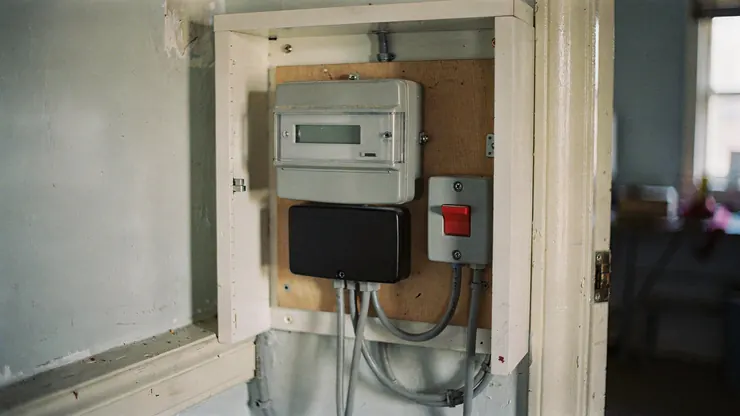
Usually not. The number on your meter, usually near a barcode, is the meter serial number. That identifies the meter itself, while the MPAN identifies the supply. Some sites have the MPAN shown next to the meter, so it's worth a look, but your bill is the reliable place to find it.
What do the numbers in an MPAN mean?
The bottom row: the MPAN core
The 13 digits in the bottom row are made up of three parts:
- Distributor ID, 2 digits: the electricity network your supply is connected to.
- Unique reference, 10 digits: the number for your supply on that network.
- Check digit, 1 digit: worked out from the other 12, which helps catch typing mistakes.
The first two digits tell you which network operator runs the wires to your premises. For the 14 regional networks, they are:
| Distributor ID | Area | Network operator |
|---|---|---|
| 10 | Eastern England | UK Power Networks |
| 11 | East Midlands | National Grid Electricity Distribution |
| 12 | London | UK Power Networks |
| 13 | Cheshire, Merseyside and North Wales | SP Energy Networks |
| 14 | West Midlands | National Grid Electricity Distribution |
| 15 | North East England | Northern Powergrid |
| 16 | North West England | SP Electricity North West |
| 17 | North Scotland | Scottish and Southern Electricity Networks |
| 18 | South Scotland | SP Energy Networks |
| 19 | South East England | UK Power Networks |
| 20 | Southern England | Scottish and Southern Electricity Networks |
| 21 | South Wales | National Grid Electricity Distribution |
| 22 | South West England | National Grid Electricity Distribution |
| 23 | Yorkshire | Northern Powergrid |
Some homes and businesses, often on newer developments, are connected to an independent network instead. Those networks have Distributor IDs of 24 and above.
The top row: codes about your meter and charges
Traditionally, the top row held three codes, making 21 characters in all with the bottom row:
- Profile class, 2 digits: how your use has been estimated for the industry's settlement process (see below).
- Meter timeswitch code, 3 digits: the type of meter and when it switches between rates, for example on Economy 7.
- Line loss factor class, 3 characters: used to work out network charges.
The top row has been changing. Under a change to the industry rules approved by Ofgem in November 2023, the meter timeswitch code is replaced by a 4-digit Standard Settlement Configuration, and the line loss factor class by a DUoS tariff ID, which is used for network charges in the same way. Suppliers began showing the new format on bills from 22 September 2025, so your top row may look different from older bills. The bottom row hasn't changed.
What does the profile class tell you?
The first two digits of the top row are your profile class. For meters that haven't been settled half-hourly, the industry has estimated how use spreads across the day from standard patterns, and the profile class says which pattern applies:
- 01: domestic, unrestricted;
- 02: domestic, Economy 7;
- 03: business, unrestricted;
- 04: business, Economy 7;
- 05 to 08: larger business sites with maximum demand metering (08 has also long been used for export MPANs, for example from solar panels);
- 00: half-hourly meter.
All meters in Great Britain are moving to half-hourly settlement, and that's due to finish on 7 May 2027. As they move, meters without a profile class show 00, while supplies with profile class 02 or 04 keep it. So 00 no longer tells you, on its own, what kind of meter you have.
How to find your MPAN without a bill
If you don't have a bill to hand, or you've just moved into premises, there are three places to ask.
- Your supplier. If you know who supplies the premises, it can give you the MPAN, and you may find it in your online account.
- Your network operator. Each network operator runs a meter point administration service. Depending on the operator, it can tell you who supplies an address, its MPAN, or both. These services may show only the supply you import, not an export MPAN. Use the Energy Networks Association's postcode tool to find yours, or, in England, Scotland or Wales, call 105 for free to be put through to your network operator.
- The Electricity Enquiry Service. Businesses can register as non-domestic customers to look up their own supply points, once their supplier approves each one. This can help if you manage several sites.
These are the meter point administration services we've checked:
| Network operator | How to ask |
|---|---|
| UK Power Networks | Online form, which emails you the supplier and MPAN for the incoming supply. You'll need to confirm you're the bill payer. For an export MPAN, use its separate export MPAN tool. |
| National Grid Electricity Distribution | Online supplier search, or call 0345 601 5972. |
| SP Electricity North West | Online supplier search. For the MPAN, call 0800 195 4141 and choose option 3. You must be the owner or occupier. |
| SP Energy Networks | Online form, or call 0330 1010 300. Gives the MPAN. You must be the owner or the person responsible for the supply. |
| Scottish and Southern Electricity Networks | Online supplier search, which gives the supplier only. For the MPAN, email mpas@sse.com with your address and meter serial number, or call the helpdesk on 01738 340627. |
For Northern Powergrid, in the North East, Yorkshire and northern Lincolnshire, use its online supplier form, email whoismysupplier@northernpowergrid.com or call 0800 111 4005. You must be, or be about to become, the owner or occupier.
How do you check an MPAN is right?
Check that the bottom row has 13 digits and that the first two match your area in the table above, or are 24 or above if you're on an independent network. The last digit is a check digit, worked out from the other 12, which helps catch typing mistakes. If you're not sure the MPAN belongs to your premises, your network operator's meter point administration service can confirm which MPAN is registered at an address.
Is an MPAN the same as an MPRN?
No. The MPAN is for electricity, and the MPRN, or Meter Point Reference Number, is for gas. The MPRN is the unique number that identifies the gas supply point at your premises.
You'll find your MPRN on your gas bill, and sometimes on a label on the gas pipe by the emergency control valve, next to your meter. If you don't have a bill, the Find My Supplier service shows the MPRN, supplier and gas transporter for an address. You can also call the Meter Number Helpline on 0870 608 1524, Monday to Friday, 8:30am to 5pm. Calls cost 7p a minute, plus your phone company's access charge.
MPAN numbers in Northern Ireland
Northern Ireland's electricity network is separate from Great Britain's, and is part of a single electricity market with the Republic of Ireland. Electricity supplies there have an 11-digit MPRN from NIE Networks rather than an MPAN. It's on your bill, and NIE Networks' Find My MPRN tool can look it up if you have your meter serial number.
Why your business needs its MPAN
You'll need your MPAN whenever you deal with your electricity supply:
- Getting quotes. Suppliers and brokers use the full supply number, including the top row, to price a quote.
- Switching supplier. Your new supplier uses it to take over the right supply.
- Moving into premises. Take a meter reading on the day you move in and give it to the supplier with your MPAN, so you aren't charged for energy used before you arrived. Until you agree a contract, you're likely to be on deemed rates, which are usually higher.
- Exporting electricity. If you have solar panels or another generator and export to the grid, you'll need an export MPAN to be paid for it, which is separate from your import MPAN.
- Checking bills. The MPAN on each bill should match the supply you're paying for, especially if you have several sites or meters.
With your MPAN to hand, you can get quotes from suppliers and compare business electricity prices with what you pay now.
Can a business have more than one MPAN?
Yes. Each electricity supply point has its own MPAN, so a business with several sites has at least one for each site. A single site can have more than one, too:
- if you export electricity, the export has its own MPAN, separate from the one for the electricity you import;
- if the premises have more than one supply, each supply has its own MPAN, and your supplier can link them as related metering points for the same customer at the same location.
When you get quotes for a site like this, list every MPAN, so that each supply is included.
Want us to check your rates? Our free check compares your rates, standing charges and contract terms with today's market. A specialist will then ring to talk you through it, with no obligation. You don't need a bill to start.
Questions about MPAN numbers
What does MPAN stand for?
Meter Point Administration Number. It's the unique number for an electricity supply, and your bill may call it your supply number.
Where is my MPAN number?
On your electricity bill, usually in a grid that starts with the letter S. The bottom row is the 13-digit core that identifies your supply. Your supplier's online account may show it too.
Is my MPAN number on my meter?
Usually not. The number on the meter is its serial number, which identifies the meter rather than the supply. Some sites have the MPAN shown next to the meter, but your bill is the reliable place to look.
How do I find my MPAN number without a bill?
Ask your supplier, or your local network operator's meter point administration service, which can tell you who supplies an address, its MPAN, or both, though an export MPAN may need a separate request. In England, Scotland and Wales, you can also call 105 for free to be put through to your network operator.
Is MPAN the same as MPRN?
No. The MPAN is the number for an electricity supply, and the MPRN is the number for a gas supply. In Northern Ireland, electricity supplies also use an MPRN.
Does my MPAN change if I switch supplier?
No. Your MPAN belongs to the supply, not the supplier, so it stays the same when you switch.
Sources
- Elexon, Meter Point Administration Number: an MPAN is a unique number relating to a metering point.
- Elexon, MSID: the 13-digit core: a 2-digit distributor number, a 10-digit reference and a 1-digit check number.
- Ofgem, decision on changes to the supply number format (REC change R0083) (November 2023): the top row's profile class, meter timeswitch code and line loss factor class; their replacement by the Standard Settlement Configuration and the DUoS tariff ID; 00 for supplies without a profile class; 02 and 04 kept; bills must follow the new format from the change date; suppliers and brokers use the supply number for quotes.
- TotalEnergies, supply number format changes: the Standard Settlement Configuration has four digits; bills from 22 September 2025 show the new format.
- Elexon, market-wide half-hourly settlement and the BSC (September 2026): milestone 8, code changes delivered, on 22 September 2025; all meters moving to half-hourly settlement; migrations due to finish on 7 May 2027.
- Elexon, profiling: the eight profile classes and standard load profiles.
- Elexon, CP1433 redlined text of BSCP516 (based on version 7.0, published 2015) and Elexon, Issue 91 issue report (2 December 2021): profile class 08 for non-half-hourly export meter points (BSCP516), and profile class 8 on the top line for smart meter export (Issue 91).
- Elexon, alphanumeric line loss factor class IDs: the line loss factor class became alphanumeric in June 2016.
- E.ON Next, half-hourly meters: 00 at the start of the top row means a half-hourly meter.
- Energy Networks Association, find my network operator: distributor IDs 10 to 23 and the network operator for each; independent networks, with IDs from 24; the MPAN is like an address for your electricity supply; call 105 for free from England, Scotland or Wales to reach your network operator.
- Ofgem, open letter on independent distribution network operators (October 2023): independent networks typically connect new developments.
- SSEN, what is an MPAN (2024): the 13-digit core; the check digit validates the previous 12 digits; MPANs are on energy bills; the meter timeswitch code and line loss factor class.
- SP Electricity North West, metering point administration service: the online supplier tool; the MPAN phone line and option; you must be the owner or occupier.
- ScottishPower, new look for SP Electricity North West (4 August 2025): the new name.
- UK Power Networks, who is my electricity supplier and what is my MPAN: the online form; confirming you're the bill payer; it shows the incoming supply only.
- UK Power Networks, payments for exporting electricity: a separate tool for export MPAN details.
- National Grid Electricity Distribution, meter point administration service: supplier and supply number for an address; phone and online search.
- SP Energy Networks, meters and MPANs: phone and online form; the MPAN can usually be found next to the meter.
- SP Energy Networks, what is my MPAN: the form gives the MPAN to the owner or the person responsible for the supply.
- SSEN, supplier search: finds the supplier for an address.
- SSEN, what is an MPAN (web page): email mpas@sse.com with your address and meter serial number.
- SSEN, meter point administration services statement 2026/27 (effective 1 April 2026): the MPAS helpdesk number.
- Northern Powergrid, who is my electricity supplier: online form, email and phone; for owners or occupiers who are, or will be, the bill payer.
- British Gas Business, MPAN, MPRN and meter serial numbers: the grid starting with S; where it sits on a business bill; the MPAN isn't on the meter; the serial number is on the meter near the barcode; the numbers stay the same when you switch; the MPRN is on your gas bill and identifies the gas supply point.
- OVO, what is an MPAN number: the MPAN is in your online account and stays the same when you switch.
- Electricity Enquiry Service (ECOES): registration for non-domestic customers.
- Ofgem, Electricity Enquiry Service definition, consultation draft (December 2020): non-domestic customers can see the metering points in their own portfolio, each authorised by the supplier.
- Ofgem, Smart Export Guarantee guidance for generators (December 2019): an export MPAN is needed to be paid under a Smart Export Guarantee tariff, and is different from the import MPAN.
- Ofgem, REC related metering points, consultation draft (June 2019): the supplier links metering points for the same customer at the same location.
- Northern Gas Networks, labelling of gas services (2017): the MPRN label is fixed at or near the emergency control valve.
- Xoserve, information for gas consumers: the helpline number and call cost.
- Find My Supplier: MPRN, gas supplier and transporter for an address.
- Citizens Advice, find out who your gas or electricity supplier is: the helpline's opening hours and call cost.
- NIE Networks, how do I get my MPRN: the 11-digit MPRN in Northern Ireland; it's on your bill.
- NIE Networks, Find My MPRN: looks up the MPRN with your address and meter serial number.
- Utility Regulator, electricity: a single wholesale electricity market across the island of Ireland, linked to Great Britain by interconnector.
- Ofgem, get a business energy contract: you're put on a deemed contract when you move in without a contract; deemed rates are usually higher.
- Citizens Advice, dealing with your energy supply when you move business premises: take meter readings on your first day and confirm them with your supplier.