Most smaller businesses don't have to have a smart meter yet, and suppliers usually install one at no extra cost. That changes for new fixed-term contracts agreed from 1 September 2027: smaller sites will need to have, or agree to have, a smart or advanced meter. Larger electricity sites have needed advanced meters since 2014.
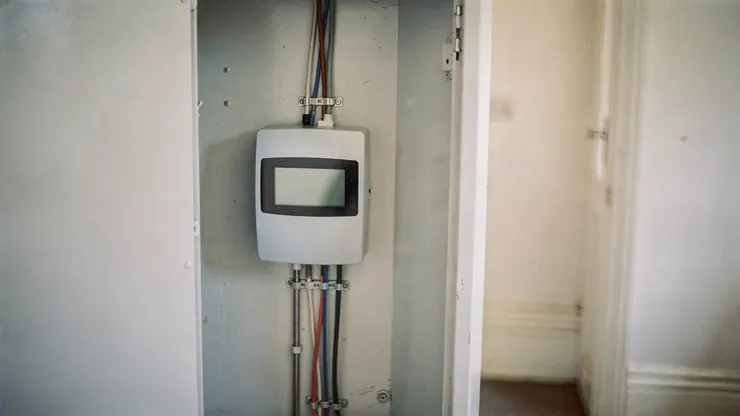
What counts as a smart meter for a business?
Businesses have two kinds of meter that send readings automatically. The government's guidance describes both as types of smart meter, though its rules and statistics usually list them separately as smart meters and advanced meters:
- SMETS meters, built to the government's Smart Metering Equipment Technical Specifications. Most new ones are the second generation, SMETS2. They send readings over a national network run by the Data Communications Company (DCC), the same network homes use.
- Advanced meters, also called AMR (automated meter reading) meters. They're common on larger business sites, and on many smaller ones too. They also send readings automatically to your supplier, but not over the DCC network.
Both can record your electricity use as often as every half hour, though the rules only require an advanced gas meter to record hourly. Whichever you have, the readings feed into your bills, so your business electricity rates are charged on what you actually use, not an estimate.
| Meter | Who usually has one | How readings are sent |
|---|---|---|
| SMETS2 | Smaller businesses, including microbusinesses | Over the DCC network, so any supplier can read it |
| SMETS1 | Smaller businesses, installed before SMETS2 | Being moved onto the DCC network, if not moved already |
| Advanced (AMR) | Larger sites, and many smaller ones | Automatically to your supplier, but not over the DCC network |
Do businesses have to have a smart meter?
It depends on the size of your site, and from September 2027 on your contract.
- Larger electricity sites in profile classes 5 to 8 have needed advanced meters since 6 April 2014, and have had to be settled half-hourly since 2017. Our half-hourly meters guide explains which sites that covers.
- Smaller sites don't have to have a smart meter at the moment. If you pay the energy bills, you can decide whether to get one.
- From 1 September 2027, new fixed-term contracts for smaller sites must include a term that you have, or agree to have, a smart or advanced meter. The government calls these smart-contingent contracts.
The government counts a site as smaller if:
- its electricity meter is in profile class 1, 2, 3 or 4 (if your bill shows the full MPAN, the first two digits of its top line are the profile class: 01 to 04, though smart and advanced meters that have moved to half-hourly settlement may now show 00); or
- it uses less than 732 MWh of gas a year.
The government says it will look at a new definition because of the move to half-hourly settlement.
What changes from 2027: smart-contingent contracts
The government confirmed the change on 1 September 2026, after a consultation. It's the government's plan for business smart meter installations after the installation targets that suppliers had from 2022 to 2025.
- From 1 January 2027, suppliers must start telling their business customers about the change.
- From 1 September 2027, any new fixed-term contract for a smaller site must include the smart meter term. Suppliers must also follow a new consumer protection code from that date.
- Existing contracts aren't affected. The rule only applies to contracts entered into on or after 1 September 2027, and not to contracts agreed earlier that start later.
Under a smart-contingent contract, your supplier should contact you within three months of your supply starting to arrange the installation, and should fit the meter within 12 months.
If you agree to the term but then choose not to have the meter fitted, your supplier can apply the consequences it explained to you before you signed. The government's guidance gives examples, such as passing on the cost of keeping traditional meters. The government says any costs must be proportionate, or they risk being treated as contractually punitive.
When you won't be penalised
The guidance says your supplier shouldn't enforce the smart meter term when the delay is outside your control, for example:
- your landlord has refused to allow the installation (the guidance says a landlord who refuses a tenant's request "would likely be acting unreasonably");
- there are technical issues stopping the installation;
- you share a meter cupboard with another organisation, and it has stopped your supplier getting in;
- the installation needs extra works first, while those works are unresolved;
- the installation fails on the day because of a problem within your supplier's control.
If your supplier can't check the reason itself, it may ask you to sign a declaration. The guidance warns that a false statement could affect your contract. Tenants can read more in our change of tenancy guide.
Does a business smart meter cost anything?
The government's guidance says smart meters are usually installed in business premises at no additional cost. Smart Energy GB says that, depending on your supplier and tariff, you may be charged for part of the work or for access to your usage data, and that your supplier will tell you about any charges up front. The government's new guidance says your supplier should give you regular information on your energy use for free.
If you're a microbusiness, your supplier must offer you a SMETS2 meter by default. Other businesses may be offered a choice of a SMETS2 meter or an advanced meter. The government's guidance notes that not all of its protections may apply if you have an advanced meter, so it's worth asking which type you're being offered.
What your supplier must do: appointments and compensation
Since 23 February 2026, Ofgem's guaranteed standards for smart meters have covered microbusinesses as well as homes. They apply to SMETS smart meters, not advanced meters. If your supplier doesn't meet a standard, it must pay you £40 automatically.
| Standard | What it means for a microbusiness |
|---|---|
| Installation appointment | You must be offered an appointment within 60 working days (12 weeks). Homes get six weeks. |
| Failed appointment | Compensation is due if an installation appointment fails because of a fault within the supplier's control. |
| Problems reported | Within five working days of you reporting a smart meter problem, your supplier must assess it, take appropriate action and offer to update you on what it found. Problems with in-home displays aren't covered for microbusinesses. |
Ofgem hasn't yet decided on a fourth standard, for smart meters that stop working in smart mode and aren't fixed within 90 days. In January 2026 it said it expected to decide in the second half of 2026.
If you're not a microbusiness, or you have an advanced meter, these standards don't apply, but your contract and Ofgem's Standards of Conduct, which cover businesses of all sizes, still do. Our microbusiness energy rules guide explains who counts as one.
What data you get from a business smart meter
The government's guidance says your supplier should give you free, regular and easy-to-understand information on your energy use, for example through an online platform or a display. Smart and advanced meters can both record your electricity use as often as every half hour (an advanced gas meter only has to record hourly).
That data can help you see when your business uses the most energy, and check that your bills match your meter. Tenants can choose to share their information with others, such as their landlord.
Half-hourly readings also matter because of a wider change in how electricity is settled. Suppliers are moving meters across Great Britain to half-hourly settlement, and Elexon, which runs settlement, expects the move to finish by 7 May 2027. Elexon says the more detailed data can be used to develop products that reward using electricity at different times. Our half-hourly meters guide explains what this means for your bills.
Switching supplier with a smart meter
A smart meter shouldn't stop you switching.
- SMETS2 meters connect to the DCC network, so your new supplier can read yours.
- SMETS1 meters are being moved onto the same network so that you can change supplier without losing smart features. The DCC says it has moved almost all the dormant meters (ones not sending automatic readings) that it can identify and upgrade itself. Until yours has been moved, you may need to send your new supplier manual readings. If a meter can't be moved, your supplier will arrange a SMETS2 replacement.
- Advanced meters don't use the DCC network, so ask your new supplier how it will collect your readings before you switch.
Our guide to switching business energy supplier covers the rest of the process. Before you look at offers, our free check can compare business energy prices you pay now with today's market.
If your business smart meter stops sending readings
Contact your supplier first. The government's guidance says that if your smart meter isn't sending automatic readings, your supplier should try to fix it as soon as possible and within 90 days. Until it's fixed, give your supplier regular meter readings, so your bills aren't estimated. Our guide to reading a business electricity bill shows how to tell an estimated reading from an actual one.
If your supplier doesn't sort it out, make a formal complaint. Your supplier has eight weeks to resolve it, and the government has decided to cut this to six weeks. After that, or sooner if you get a deadlock letter, micro and small businesses can take it to the Energy Ombudsman for free.
Radio teleswitch meters
Some older meters used the Radio Teleswitch Service (RTS), a radio signal that told them when to switch between peak and off-peak rates and could control heating and hot water. The signal was switched off in stages from 30 June 2025, with a pause over the winter, and the switch-off was completed on 30 June 2026.
Ofgem said fewer than 154,000 RTS meters were still to be replaced in January 2026, and that customers needed them replaced or risked losing control of their heating and hot water. Suppliers must take all reasonable steps to replace RTS meters with smart meters. If your premises still has one, contact your supplier straight away to book a replacement.
How many business meters are smart?
At the end of June 2026, large suppliers had 1.3 million smart and advanced meters at smaller business sites, 65% of the business meters they supply. Including small suppliers, whose latest figures are for the end of December 2025, the government counts 2.1 million, or 67% of the business meters covered by the rollout.
| Smaller business sites, large suppliers, end of June 2026 | Meters |
|---|---|
| Advanced meters | 0.7 million |
| Smart meters | 0.6 million |
| Smart and advanced meters in total | 1.3 million (65%) |
| Smart meters working in smart mode | 89% of smart meters |
Large suppliers fitted 28,000 smart and advanced meters at smaller business sites from April to June 2026: 22,000 smart and 6,000 advanced.
Want us to check your rates? Our free check compares your rates, standing charges and contract terms with today's market. A specialist will then ring to talk you through it, with no obligation. You don't need a bill to start.
Questions about smart meters for business
Can my business get a smart meter?
Yes. Ask your supplier. Smart meters are usually installed in business premises at no additional cost, and a microbusiness must be offered a SMETS2 meter by default.
Do businesses have to have smart meters?
Smaller sites don't have to yet. From 1 September 2027, new fixed-term contracts for smaller sites must include a term that you have, or agree to have, a smart or advanced meter. Larger electricity sites in profile classes 5 to 8 have needed advanced meters since 2014.
What's the difference between a smart meter and an AMR meter?
Both send readings automatically and can record half-hourly electricity use (an advanced gas meter only has to record hourly). SMETS smart meters use the national DCC network, while AMR, or advanced, meters send readings to your supplier without using that network. The government's guidance treats both as types of smart meter, and either one meets the 2027 smart meter term.
Can I switch supplier if I have a smart meter?
Yes. SMETS2 meters work with any supplier through the DCC network, and SMETS1 meters are being moved onto it. With an advanced meter, check how your new supplier will collect your readings.
What if my landlord won't allow a smart meter?
Under the 2027 rules, your supplier shouldn't enforce the smart meter term if your landlord has refused. It may ask you to sign a declaration. The guidance says a landlord who refuses a tenant's request would likely be acting unreasonably.
What compensation can a microbusiness get?
Since 23 February 2026, £40 if your supplier doesn't offer a smart meter installation appointment within 60 working days, if an appointment fails because of a fault within its control, or if it doesn't assess a reported smart meter problem and offer you an update within five working days. This applies to SMETS smart meters, not advanced meters.
Sources
- DESNZ, non-domestic smart meter rollout post-2025: government response (1 September 2026), with the consultation page: smart-contingent contracts for small and medium non-domestic sites; communication from 1 January 2027; universal implementation and the consumer protection code from 1 September 2027; only new contracts entered into from 1 September 2027; follows the 2022 to 2025 installation targets framework; smart or advanced meters both count; costs must be proportionate.
- DESNZ, non-domestic smart meter rollout: Annex B, policy guidance (1 September 2026): designated premises (profile classes 1 to 4; gas below 732 MWh a year); SMETS and AMR meters; usually installed at no additional cost; SMETS2 by default for microbusinesses; protections may not all apply to advanced meters; contact within three months and installation within 12 months; circumstances outside your control; signed declarations; landlord refusal likely unreasonable; free, regular information on energy use; sharing data with a landlord; fixing a meter within 90 days; six weeks for complaints, and the Energy Ombudsman for small businesses.
- DESNZ, smart meters in Great Britain, quarterly update June 2026 (27 August 2026): non-domestic smart and advanced meters at the end of June 2026 (large suppliers) and the end of December 2025 (including small suppliers); 89% in smart mode; Q2 2026 installations.
- Ofgem, final decision on smart meter guaranteed standards (30 January 2026): in force from 23 February 2026; 60 working days for microbusiness appointments; in-home display issues don't apply to microbusinesses; no decision yet on the fourth standard.
- Ofgem, Ofgem to roll out tougher smart meter rules from February (30 January 2026): the three standards; £40 automatic compensation; the fourth standard on meters not fixed after 90 days.
- Elexon, P272: mandatory half-hourly settlement for profile classes 5 to 8: advanced meters required for profile classes 5 to 8 since 6 April 2014; half-hourly settlement by 1 April 2017.
- Elexon, market-wide half-hourly settlement and the BSC: migration complete by 7 May 2027; more detailed data for new products.
- Smart DCC, enrolment and adoption: SMETS1 meters moved onto the DCC network so customers can switch without losing smart features; almost all dormant meters the DCC can identify and upgrade already migrated; manual readings until migrated; SMETS2 replacement where migration fails.
- Ofgem, radio teleswitch policy consultation decision and update on phase-out (5 March 2026): phase-out from 30 June 2025; restarted in England and Wales on 2 March 2026; fewer than 154,000 RTS meters left in January 2026; licence condition 39.
- Ofgem, complain about your energy supplier: eight weeks or a deadlock letter, then the Energy Ombudsman.
- DESNZ, fairer, faster redress in the energy market: consultation response (17 June 2026): the wait before a complaint can go to the Energy Ombudsman to be cut from eight weeks to six.
- Energy Ombudsman, 20 things to know about Energy Ombudsman (17 July 2026): free to use; small businesses and microbusinesses eligible; eight weeks reducing to six.
- Ofgem, Ofgem confirms greater protection for businesses (5 April 2024): Standards of Conduct cover businesses of any size from 1 July 2024.
- Ofgem, statutory consultation on smart meter guaranteed standards (August 2025): the same £40 standard payment for microbusinesses; SMETS meters only.
- Smart Energy GB, smart meters for small businesses FAQs: if you pay the bills you decide whether to get a smart meter; possible charges for part of the upgrade or for data access.
- Energy UK, the Radio Teleswitch Service switch-off (1 July 2026): what RTS did; phase-out completed on 30 June 2026.